Splash Buster
Nebula StudioPuzzle
4.9776.00 Reviews
- Version
- 1.2.4
- Installs
- 1.00M
- Age Rating
- Everyone
Screenshots
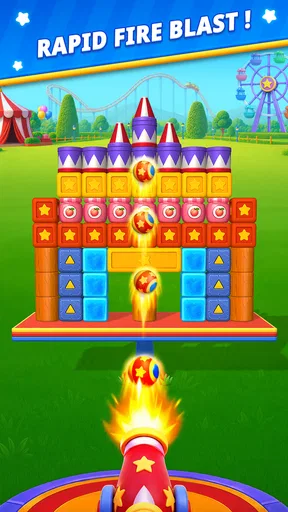
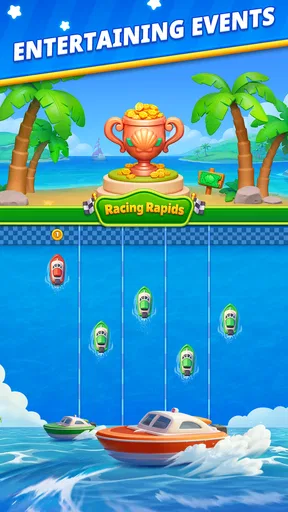
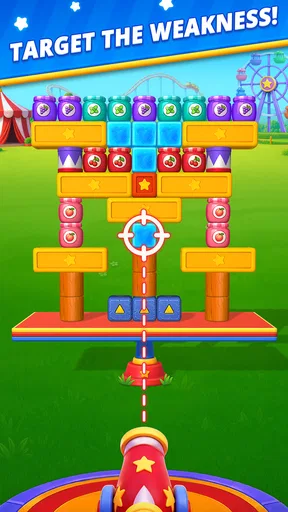
Our Review of Splash Buster
 Analysis by Appyee
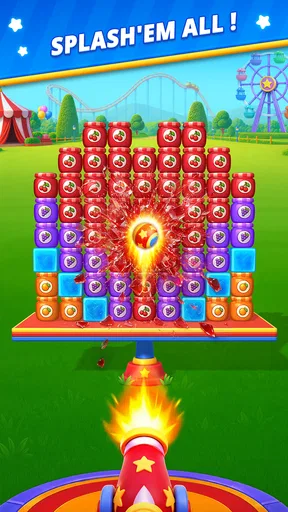
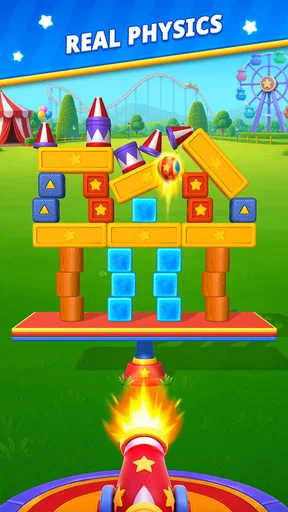
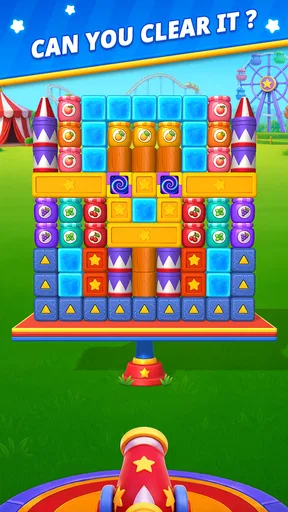
Splash Buster is a puzzle game built around a simple promise: point a cannon, make the right shot, and let a chain of physical reactions do the satisfying work. I found the appeal less in fast reflexes and more in judging angles, timing, and the way objects respond after the first impact. That makes it an easy game to pick up for a short break, while still giving careful players a reason to think before every launch.
It comes from Nebula Studio and is available as a free game for everyone. Its store presentation is brief, but the central idea is clear enough to understand immediately. You are not being asked to learn a complicated control scheme or manage a large set of menus before playing. The attraction is the puzzle itself: line up the cannon, fire, watch the scene react, and adjust your next attempt when the result is not quite right.
Getting into the first puzzle without unnecessary friction
The first thing I would check is whether the game installs and opens cleanly on the device. Splash Buster supports Android 7.1 and later, so compatibility is reasonably broad, but an eligible operating system does not guarantee a perfect experience on every phone. Older hardware may still struggle with a physics-heavy scene, especially if the device is already busy with other apps or has very little free storage.
Because this is a free download with optional purchases ranging from $0.99 to $99.99 per item, I would also decide in advance whether I want to spend anything. That is not a criticism of the game by itself, but it is a useful setup habit. If I am handing the phone to a child, the Everyone age classification makes the game approachable, while purchase controls on the device remain worth checking before play.
The current version is 1.0.4, so keeping the installation current is a sensible first step when something behaves oddly. A puzzle game that depends on objects colliding and reacting can feel broken if an update is only partly installed or if the device is running an outdated build. I would close the store, reopen it, and confirm that the installed version has finished updating before spending time troubleshooting individual shots.
Another practical check is touch input. Before blaming a level, I would test whether the cannon responds consistently to a slow drag or tap. If the aiming line jumps, lags, or releases unexpectedly, the issue may be the screen rather than the puzzle. Cleaning the display, removing a poorly fitted screen protector for a quick test, and closing a demanding background app can make a noticeable difference without changing any game setting.
There is also a useful distinction between a failed solution and a failed input. If the cannon fires exactly where intended but the objects settle in an unwanted position, that is part of solving the puzzle. If the shot fires before I finish aiming, or the control does not register at all, repeating the same move is unlikely to help. I would first verify that the gesture is being read correctly, then return to the level with a more deliberate motion.
Why early attempts can feel harder than expected
The store summary makes the game sound immediate, but the physical-puzzle format can create a small learning curve. A direct hit is not always the best hit. Sometimes the useful result comes from striking an object at an angle so that it redirects movement elsewhere. I had to stop treating the cannon as a simple target-and-fire tool and start viewing the whole scene as a connected arrangement.
That change in mindset is important for anyone who normally prefers traditional match-three puzzles or word games. Those alternatives usually make the available move structure more explicit. Here, the challenge comes from predicting consequences. A shot that appears to do very little may be setting up the next reaction, while a powerful-looking impact can scatter objects in a way that makes the remaining task harder.
For that reason, I recommend watching the complete result of a failed attempt before immediately firing again. The useful information is often in the second or third movement, not the initial collision. Did an object roll too far? Did the chain stop because the angle was too shallow? Did the cannon hit the correct area but start the reaction too early? Treating each attempt as a small experiment is more effective than making random adjustments.
A steadier workflow for difficult shots
My preferred routine is to pause mentally before each launch and identify the first object that must move. I then look for the least forceful route that could start the desired sequence. This is a better approach than aiming at the most obvious target, because a large impact may create extra movement that works against the goal.
When a shot fails, I change one thing at a time. I might alter the angle while keeping the release point similar, or keep the angle and change when I fire. Changing everything at once makes it impossible to know what improved the result. This small habit is one of the most useful ways to make a physics puzzle feel logical instead of random.
Another helpful technique is to use the edges of the scene as part of the plan. In a cannon puzzle, a surface can redirect motion, and an object that seems unimportant may become a bumper. I would not assume that the shortest route is the correct one. A controlled ricochet or delayed collision can be more reliable than a direct approach, particularly when the first target is protected by other pieces.
It is also worth recognizing when restarting is better than trying to rescue a poor position. If the opening shot sends several objects into awkward places, continuing may only create more confusion. A fresh attempt lets me test a cleaner idea and often takes less time than improvising around a bad chain reaction. The game is most enjoyable when restarts are treated as part of the puzzle process rather than as a punishment.
For a quick everyday session, I would use it during a short wait or between routine tasks. I can play one puzzle, study the result, and put the phone away without needing a long uninterrupted commitment. That makes the game a better fit for brief mental breaks than for someone looking for a large story, extensive progression, or a competitive multiplayer routine.
When the problem may be outside the game
Not every pause, stutter, or failed launch points to Splash Buster itself. Phones can reduce performance when they are hot, nearly full, or running several demanding processes. If the game becomes less responsive after extended use, I would let the device cool, close background apps, and try again. Comparing behavior after a fresh restart is a simple way to separate a temporary device issue from a repeatable game issue.
Network conditions can also confuse the diagnosis, even though the core appeal is the local puzzle interaction. If an update, store check, or purchase-related screen does not load properly, I would test the connection separately and reopen the game afterward. A weak connection can make an app appear stuck during a transition without saying anything about the quality of its cannon controls or physics.
Storage is another easy-to-miss cause. A phone that technically has the game installed may still have too little working room for updates or smooth general operation. Clearing unnecessary files and confirming that the latest installation completed can be more useful than repeatedly reinstalling. I would only take that more drastic step after checking the device, the connection, and the update state.
If touch behavior is inconsistent across several apps, Splash Buster is probably not the cause. The same applies if the entire phone is slow, the display misses gestures elsewhere, or other games show similar problems. In those cases, the practical answer is device maintenance or support rather than changing puzzle tactics.
On the other hand, a repeatable problem that happens only in one level or after one precise action deserves a different approach. I would note the exact sequence, close and reopen the game, and see whether the behavior returns. That record is much more useful than saying only that “the game does not work,” especially when deciding whether to wait for an update or contact the developer.
What the rating and audience suggest
The game holds a 4.7 average from around 50 ratings and has around 10 thousand installs. Those figures suggest a small but encouraging audience response, rather than the broad evidence available for a major puzzle franchise. I read that as a reason to try it for its specific style, not as proof that it will suit every player.
The Everyone classification makes it a reasonable choice for a shared family device, particularly when the player enjoys experimenting with cause and effect. Still, younger players may need help understanding that a failed attempt is informative rather than unfair. The most useful guidance is to ask what the first collision changed, not simply to tell them where to aim.
Adults who want a calm, compact puzzle may appreciate the absence of a complicated premise. Players who need constant novelty, elaborate objectives, or a deep collection system may find the focused cannon-and-reaction format too narrow. I would also skip it if I dislike restarting a puzzle to test a refined idea; that loop is central to the experience.
Where it stands beside familiar puzzle alternatives
Compared with match-three games, Splash Buster asks for more spatial prediction and less pattern scanning. Compared with physics sandboxes, it gives the experimentation a clearer puzzle purpose. It sits between those styles: structured enough to provide a goal, but open enough that the route to the result depends on how objects interact.
That middle ground is its strongest identity. A conventional logic game may offer a clean sequence of deductions, while a physics game may let me play without a precise solution. Here, I get the satisfaction of planning while still dealing with movement that can surprise me. The trade-off is that a failed result can occasionally feel less transparent than a wrong answer in a grid-based puzzle.
If I wanted a game for rapid tapping, I would choose something more action-focused. If I wanted a long-form brain-training routine with clearly measured categories, I would look elsewhere. Splash Buster is better for the player who enjoys making a prediction, seeing the physical outcome, and refining the next attempt.
Free access, optional spending, and sensible expectations
The free entry point is a meaningful advantage because it lets me judge the cannon controls and puzzle style before committing money. I would begin without purchasing anything and see whether the core loop remains enjoyable over several sessions. Optional items can be useful to some players, but they should not be the reason to install a game whose basic interaction does not already feel satisfying.
Since individual purchases can reach a high amount, I would be especially careful with a shared device. The safest routine is to review the device’s purchase authentication and make sure the person playing understands which actions cost money. That is practical advice for any free game with in-app purchases, but it matters here because the game is approachable enough for younger users to try.
My final view is positive but specific. Splash Buster works best as a compact physics puzzle for people who enjoy angles, controlled experiments, and chain reactions that do not always behave exactly as expected. Its small audience means I would not treat the rating as a guarantee, and its focused format will not replace a deeper puzzle collection for everyone.
I would recommend installing it when you want a free, easy-to-start challenge that fits into short sessions. Begin by checking touch response, updates, storage, and device performance; then solve methodically by changing one variable per attempt. The key is to plan the reaction, not merely the first impact. If that style sounds rewarding, Nebula Studio’s game has a clear reason to stay on your phone. If you prefer predictable logic grids, rapid action, or extensive long-term systems, a different puzzle category will probably serve you better.
Privacy and Permissions
See what permissions an app requests and how it handles your data.
- Wi-Fi connection information
- view Wi-Fi connections
- Other
- view network connections, full network access, control vibration, prevent device from sleeping, Google Play license check
Verdict
Strengths of Splash Buster
- Simple controls make it easy to start playing immediately.
- Short rounds are ideal for quick breaks or casual sessions.
- Bright visual effects make the gameplay feel lively.
- Increasing challenge keeps later stages more engaging.
- Works well for players who prefer straightforward arcade games.
Limitations of Splash Buster
- Gameplay may become repetitive after extended sessions.
- Limited strategic depth may not satisfy experienced players.
- Frequent effects can feel distracting on smaller screens.
- Progression may feel slow without regular play.
- Performance can vary on older phones or tablets.
Other Releases by Nebula Studio
View All


Similar Picks in This Category
View All
Block Blast!
HungryStudio4.8

Braindom: Brain Games Test
Lahana Game Studio4.6

AMAZE!
CrazyLabs LTD4.6

Sudoku - Classic Sudoku Puzzle
Oakever Games4.7

Art Puzzle - Puzzle Games
Easybrain4.8

Amaze GO!
Oakever Games4.9
Frequently Asked Questions
What is Splash Buster and how does the game work?
Splash Buster is a casual puzzle game built around colorful water-themed challenges. After installing it, players typically complete short levels by matching, clearing, or arranging objects to create combinations and meet the stage objective. The controls are designed for touchscreens, making the game easy to understand, although later levels may require more careful planning, quicker decisions, and strategic use of available power-ups.
Is Splash Buster free to download and play?
Splash Buster can generally be downloaded without an upfront purchase, allowing players to try the core gameplay at no cost. However, free-to-play games may include optional in-app purchases for extra lives, boosters, coins, or other conveniences. Advertising may also appear between levels or during certain actions. Before downloading, check the store listing and your device’s purchase settings, especially if children may use the device.
Does Splash Buster require an internet connection?
The basic levels of Splash Buster may be playable without a constant internet connection, which is useful when traveling or playing with limited data. Nevertheless, an online connection can be required for advertisements, cloud saves, events, updates, leaderboards, or in-app purchases. Offline availability can also vary between versions, so it is best to test the game after installation rather than assuming every feature works without Wi-Fi or mobile data.
Is Splash Buster suitable for children and casual players?
Splash Buster is aimed at players who enjoy simple, colorful, and quick puzzle sessions, so it can be approachable for casual gamers and older children. Even so, the suitability depends on the child’s age, the game’s advertising, and whether optional purchases are enabled. Parents should review the current age rating, privacy information, and permissions, then activate purchase restrictions if the game will be used by children.
What should I check before installing Splash Buster on Android or iOS?
Before installing Splash Buster, confirm that your phone or tablet meets the operating-system requirements and has enough free storage for the game and future updates. Review the developer name, recent user feedback, privacy policy, and requested permissions in the official Google Play or App Store listing. It is also worth checking whether progress is linked to an account, since changing devices or uninstalling the game may affect saved progress.
Play our best games!


